Home
Latest News
Case Study: Business Loan Empowering a Visually Impaired Woman Entrepreneur
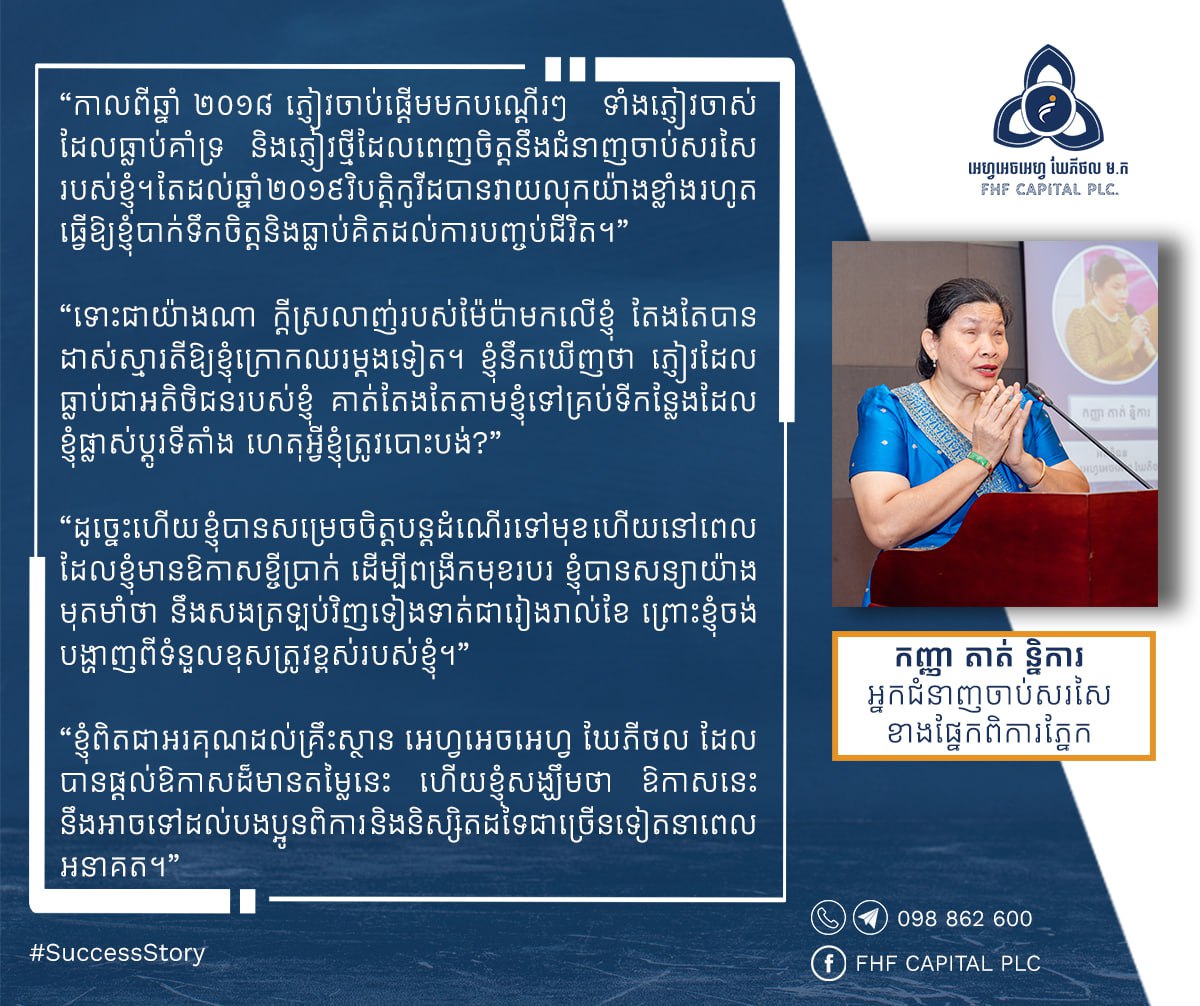
This case study highlights the resilience and determination of Ms. Tath Nika, a visually impaired woman entrepreneur who sought additional business capital to expand her massage therapy service—demonstrating how inclusive finance can empower people with disabilities to build sustainable livelihoods.
Ms. Tath Nika once struggled with feelings of hopelessness, believing that her visual impairment limited her value in society. However, with strong emotional support from her family, she rebuilt her confidence and chose to move forward with determination.
With support from Maryknoll, she received general education and Braille literacy training. She later pursued professional massage training under a Canadian instructor who was also visually impaired. Despite concerns and discouragement from her family due to safety risks and social stigma, Ms. Tath Nika persisted and successfully obtained professional massage certification.
In 2016, she started her own massage service, offering therapeutic massage to clients. The business not only became her main source of income but also served as a powerful example of the abilities and contributions of people with disabilities. By 2018, her client base had grown steadily. However, the COVID-19 crisis in 2019 caused severe hardship, pushing her into deep emotional distress. Encouraged by her parents and loyal clients, she found the strength to continue.
In 2022, Ms. Tath Nika officially reopened her business. Following advice from an acquaintance, she decided to seek financing from a microfinance institution to further expand her operations. Despite initial concerns that her disability might prevent her from accessing a loan, she emphasized that she wanted to be assessed based on her capability, not sympathy, and committed to repaying the loan responsibly and on time.
Ms. Tath Nika expressed heartfelt gratitude to FHF CAPITAL PLC for providing her with the opportunity and trust she needed. She hopes that similar opportunities will continue to be available for people with disabilities and students in the future.
This story reflects FHF CAPITAL’s commitment to financial inclusion, dignity, and equal opportunity, ensuring that access to finance is based on potential and responsibility—regardless of physical limitations.